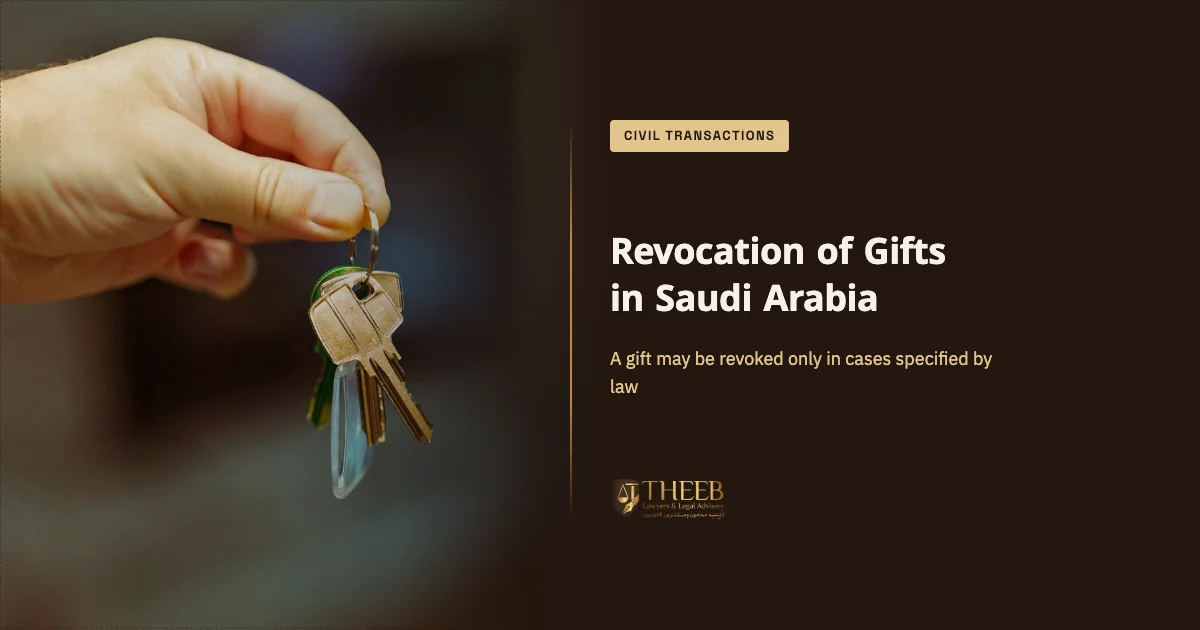
The Civil Transactions Law regulates contracts of gift and the circumstances in which a donor may revoke a gift in detail. A claim to recover a gift therefore cannot be based solely on the donor’s wish to regain the property; it is subject to specific statutory conditions and requirements.
What is a gift?
Article 366 defines a gift as a contract under which a donor transfers ownership of property to a donee during the donor’s lifetime without consideration.
A donor may impose a specific obligation on the donee. If consideration is stipulated, however, the transaction becomes subject to the rules governing transactions for consideration, according to the nature of that consideration.
Formalisation of a gift
A gift of immovable property is not validly concluded unless it is formally documented in accordance with the applicable statutory provisions.
A gift of movable property is concluded either through formal documentation in accordance with the statutory provisions or by delivery of possession, as provided in Article 368.
May a donor recover a gift?
Once a gift has been concluded, the donor does not have an unrestricted right to revoke it. The Law specifies particular circumstances in which revocation is permitted.
Article 376 provides that a donor may revoke a gift if the donee agrees to return the gifted property.
If the donee does not agree, the donor may apply to the court for revocation in specified circumstances, including:
A gift from a parent to their child
Revocation may be sought where there is a justifiable ground for doing so.
An express right of revocation
This applies where the donor has reserved a right to revoke the gift in specified circumstances for a lawful purpose.
Breach of a stipulated obligation
This applies where the gift is expressly or implicitly conditional on an obligation to be performed by the donee, and the donee breaches that obligation.
When does the right of revocation lapse?
Under Article 377 of the Civil Transactions Law, the right to revoke a gift lapses if either party to the contract dies before revocation.
There are also circumstances in which the donor cannot recover the gifted property itself, including where the donee has disposed of it by transferring ownership, a substantial inseparable addition has been made to it, its nature has changed, or it has been destroyed or lost.
What may the donor recover upon revocation?
Where a ground for revocation exists, the donor may recover the gifted property in accordance with the statutory rules. The donor is also entitled to its fruits from the date on which the donee agrees to return it, or from the date proceedings are instituted in cases where the donor is entitled to seek revocation.
The nature of the gifted property and any dealings affecting it are therefore among the most important matters to examine before bringing a claim.